England may still be dealing with drought conditions, but that does not mean the risk of flooding has disappeared. In fact, the first periods of heavy autumn rainfall can create serious problems for gullies, culverts and surface water drainage systems.
The latest Environment Agency figures show that reservoir storage across England had fallen to 56.1% by the middle of September 2026. Ten areas remained officially in drought, while the remaining areas were classed as being in prolonged dry weather.
With periods of heavy rain now beginning to arrive, businesses, landowners and site managers need to consider whether their drainage systems are ready to deal with the sudden increase in surface water.
Can Flooding Really Happen During a Drought?
Drought and flooding may sound like complete opposites, but they can happen within a very short period of one another. Drought describes the wider water resource situation, including reservoir levels, river flows, groundwater and rainfall over an extended period.
Localised flooding can happen following a single intense downpour. A drainage system does not need weeks of rain to become overwhelmed, particularly if gullies, channels or culverts are already partially obstructed.
Heavy rainfall may improve the longer-term water situation, but it can still cause immediate problems at ground level.
Why Dry Ground Can Increase Surface Water Runoff
When soil has been dry for a prolonged period, it may become hard, compacted and less able to absorb intense rainfall quickly. Instead of soaking gradually into the ground, more water can travel across the surface towards roads, yards, car parks and lower areas of land.
The risk is particularly noticeable where large areas have been concreted, paved or covered with tarmac. These surfaces provide very little natural drainage, meaning rainwater must be carried away through gullies, channels, pipework and culverts.
If those systems are restricted, the water has nowhere else to go.
Why Gullies Are Often the First Place Problems Appear
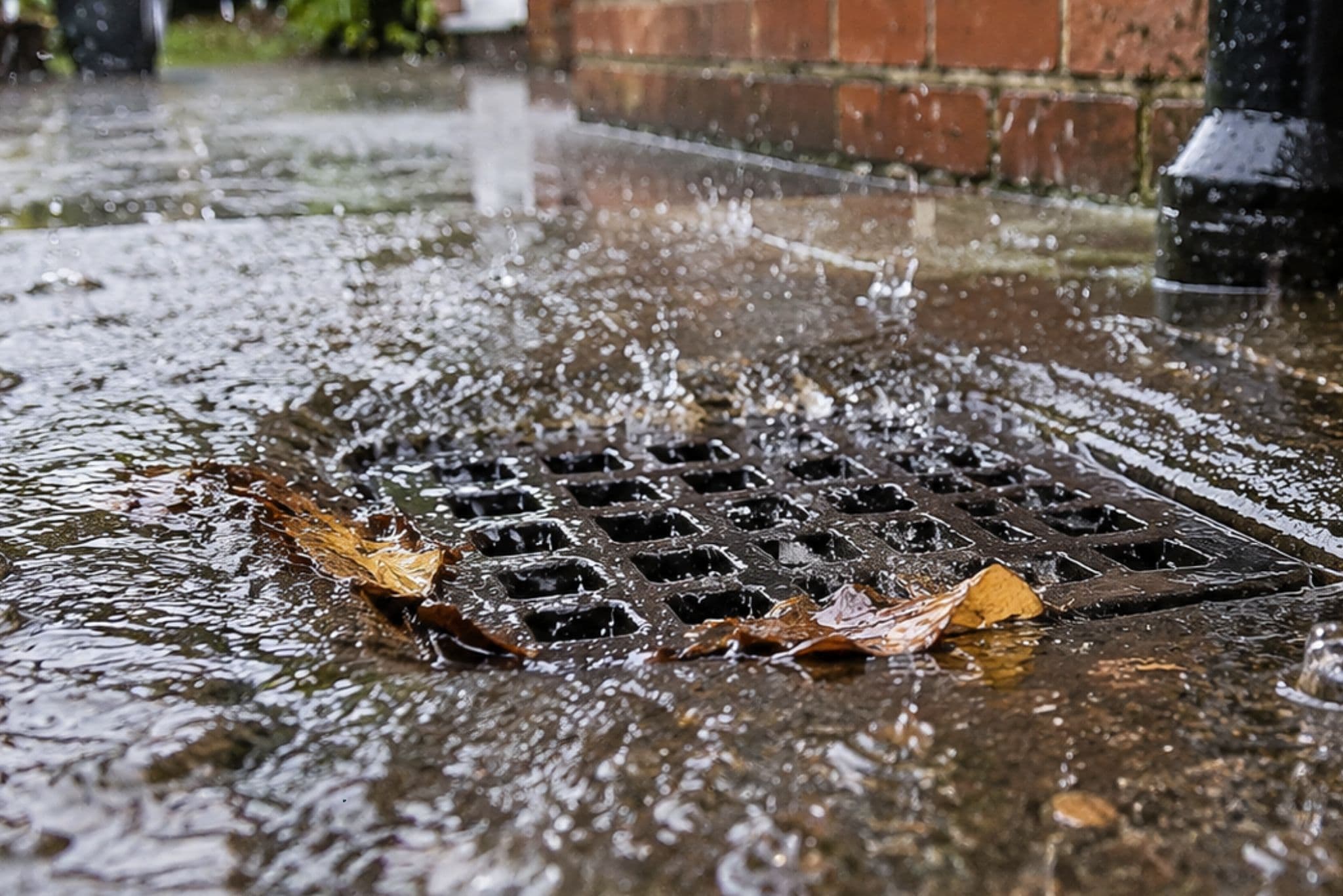
Road and yard gullies sit at the entrance to many surface water drainage systems. They collect rainwater from the surrounding area before directing it into underground pipework.
During dry weather, leaves, litter, stones, soil and other debris can gradually accumulate around the grating or inside the gully pot. Because very little water is moving through the system, the developing restriction may go unnoticed.
When heavy rain arrives, surface water carries even more material towards the gully. A partially blocked inlet can quickly become overwhelmed, leading to standing water across roads, car parks, loading areas and access routes.
Culverts Can Become Major Pinch Points
Culverts allow water to pass beneath roads, railway lines, entrances, developments and areas of land. They play an important role in managing larger volumes of surface water, particularly around rural sites, industrial estates and infrastructure.
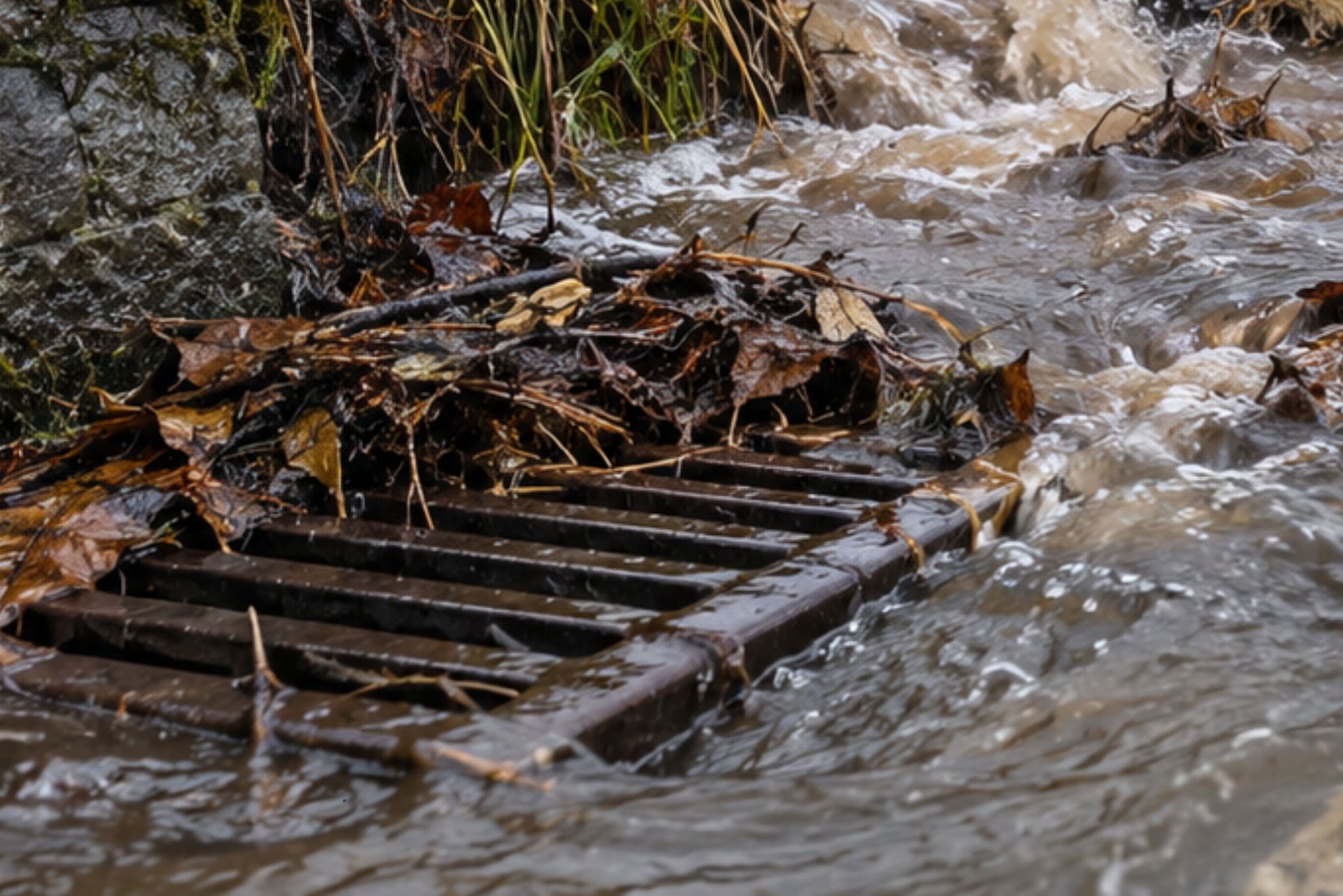
Over time, culverts can collect silt, branches, vegetation, rubbish and displaced material. Even a relatively small restriction can significantly reduce the available capacity of the channel.
The entrance to the culvert can also become blocked when heavy rain washes loose material downstream. Water then begins to back up behind the obstruction, potentially flooding the surrounding area or damaging nearby land and infrastructure.
Dry Weather Can Hide Drainage Problems
A drainage system can appear to be working normally throughout a dry summer simply because it has not been required to carry much water. Low flows do not always reveal a build-up of silt, debris or other restrictions.
The first intense rainfall of autumn effectively tests the system. Unfortunately, that is often when hidden drainage problems become visible for the first time.
Warning signs can include:
- Water collecting around gullies.
- Slow drainage from yards and car parks.
- Overflowing inspection chambers.
- Water backing up around culvert entrances.
- Unusual smells from surface water drains.
- Previous areas of flooding returning.
- Visible silt, leaves or debris around drainage channels.
These signs should not be ignored, particularly where flooding could affect buildings, roads, machinery or customer access.
How Tanker Jetting Helps Clear Larger Drainage Systems
For larger commercial drains, sewers and culverts, standard drain clearance equipment may not provide the water flow or capacity required. This is where professional tanker jetting services can be used.
Tanker jetters use a high flow of water to remove silt, debris and accumulated deposits from larger-diameter pipework. They can be deployed for planned cleaning programmes as well as emergency blockages.
At Drainage 2000, our tanker jetting fleet can clean pipework from 100mm in diameter upwards. The equipment is suited to commercial drainage networks, heavily used surface water systems and larger pipework where silt and debris are restricting the flow.
Clearing these restrictions helps restore the available capacity of the system before it is placed under pressure by further rainfall.
When Is a CCTV Drain Survey Required?
Cleaning may remove the immediate obstruction, but recurring flooding can sometimes indicate a deeper problem. Damaged pipework, collapsed sections, displaced joints and root ingress can all restrict water movement.
A commercial CCTV drain survey allows the internal condition of accessible drainage pipework to be inspected. It can help identify the location and cause of a restriction without unnecessary excavation.
Survey findings can then be used to plan cleaning, maintenance or repairs based on the actual condition of the system.
Planned Maintenance Before Autumn Rainfall
Waiting until a gully or culvert floods can lead to avoidable disruption. Access routes may become unusable, car parks can flood and water may begin moving towards buildings or valuable equipment.
Planned drainage maintenance allows vulnerable parts of the system to be inspected and cleaned before periods of heavier rainfall. This is particularly important for:
- Industrial estates and factories.
- Warehouses and distribution centres.
- Retail parks and supermarkets.
- Schools and public buildings.
- Construction sites.
- Roads and transport infrastructure.
- Farms and rural businesses.
- Property management companies.
- Large car parks and loading yards.
The appropriate service will depend on the size, condition and layout of the drainage network. Our team can assess the problem and recommend the most suitable equipment.
Prepare Your Drainage System for Heavy Rain
Low reservoir levels do not mean businesses can ignore the risk of surface water flooding. After months of dry weather, gullies and culverts may contain enough silt and debris to significantly reduce their capacity.
At Drainage 2000, we provide commercial tanker jetting, culvert cleaning, CCTV drain surveys and planned drainage maintenance. Our specialist fleet allows us to work on everything from individual blocked gullies to large, heavily silted drainage systems.
If you are responsible for a commercial site, industrial estate, road, car park or larger drainage network, now is a sensible time to arrange an inspection or preventative clean.
Contact Drainage 2000 or call 01246 456 300 to discuss your drainage requirements.